Leaky Single-Handle Faucets: Repair or Replace?
Leaky single-handle faucet? Learn when a simple cartridge repair makes sense and when you’re better off replacing the whole faucet for long-term value.
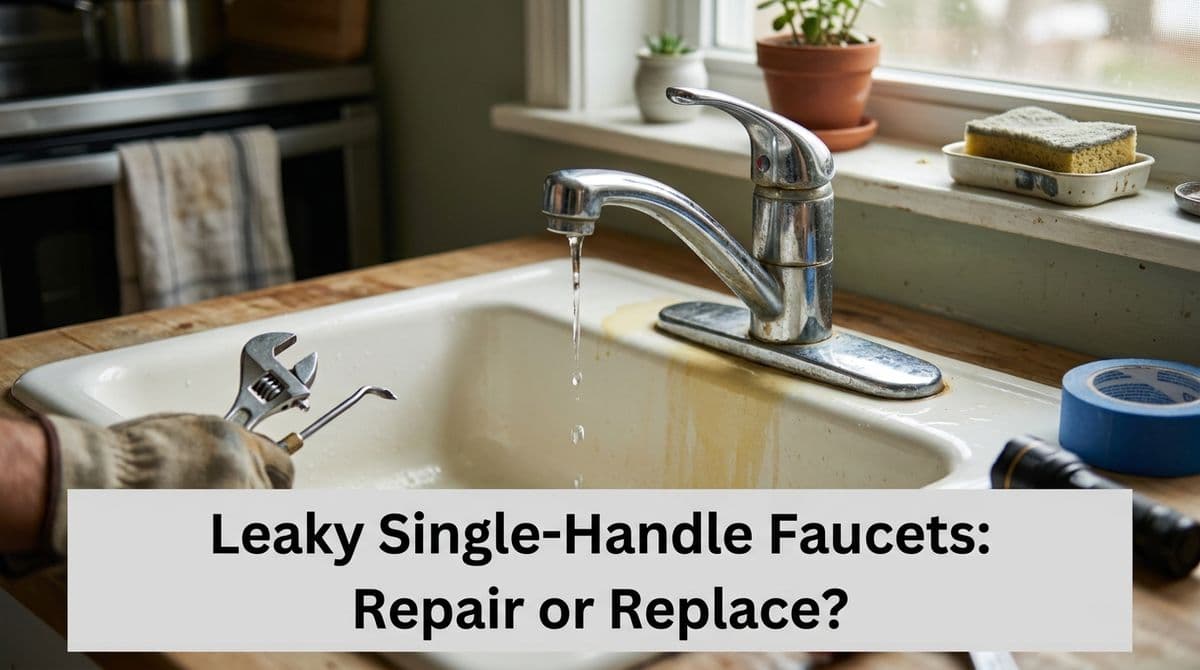
When a "Simple Drip" Turns Into a Bigger Decision
We recently got a call from a customer — let's call her Susan — who was trying to make a smart game plan for a couple of leaky single-handle faucets in her home.
Her tub/shower faucet had always dripped a little at the tub spout, but lately it had gotten worse. Instead of just a drip, it would start running steadily after a shower unless she kept turning it on and off until it finally quit. On top of that, her single-handle kitchen faucet had to be pushed just right to stop dripping — she had to lift the handle back up a bit after “off,” or it would keep leaking.
Her big question to us: “Does this sound like washers, or do I need a whole new faucet?” And, just as importantly, she wanted to know what was truly the most economical option.
Why Single-Handle Faucets Start Leaking
Most modern single-handle faucets — including brands like Peerless, Delta, Moen, and others — don’t use the old-school rubber washers people often think of. Instead, they usually rely on a cartridge (or a ball/ceramic disk assembly) inside the body of the faucet.
Over time, several things can cause leaks:
- Worn cartridge seals inside the faucet
- Seats and springs (common in some single-handle tub/shower valves) getting brittle or clogged
- Mineral buildup from hard water that scores and wears internal parts
- Handle misalignment or internal wear that makes it hard to find the true “off” position
In Susan’s case, her tub/shower valve sounded like it needed either a full cartridge replacement or new seats and springs behind the cartridge. Her kitchen faucet likely needed its internal cartridge rebuilt or replaced as well.
Repairing the Cartridge vs. Replacing the Faucet
For most homeowners, the real question isn’t what failed inside the faucet — it’s whether it’s worth fixing. Here’s how we usually break it down on calls like Susan’s.
When It Makes Sense to Repair the Cartridge
We typically recommend repairing (replacing the cartridge or internal seals) when:
- The faucet is in good overall shape. No corrosion, no wobbling, no peeling finish.
- You like the style and function. You’re not itching for a cosmetic upgrade.
- Parts are still available. Many major brands have great parts support.
- The repair cost is clearly lower than replacing the faucet and you’re happy with what you have.
On Susan’s tub/shower, we quoted a flat rate for the shower cartridge replacement. In her situation, repairing made sense because shower valves are often more cost-effective to rebuild than to replace entirely, which would require opening the wall.
When It’s Smarter to Replace the Whole Faucet
On the kitchen side, the math looked different. Our flat-rate price to repair that kitchen faucet (replacing its internal parts) was $228. If she chose to provide her own new kitchen faucet, our installation fee would be $255.
Her reaction was exactly what we hear a lot: “Wow, might as well get a new faucet, huh?” And in many cases, she’s right. We often suggest a full replacement when:
- Repair cost is close to replacement cost. If a full rebuild is nearly as much as installing a new faucet, replacement usually wins.
- The faucet is older or dated. If it’s 10–15+ years old, new fixtures can offer better performance and style.
- You’re already frustrated with it. Hard to operate, low pressure, or hard to clean.
- Finish is failing or corroded. Fixing the inside doesn’t fix an ugly or worn exterior.
That’s why we’re always upfront about both prices: repair vs. install a customer-supplied faucet. We’d rather you make an informed decision than patch something that doesn’t really deserve saving.
What We Actually Do on a Leaky Faucet Service Call
Homeowners often assume we just “swap a part,” but there’s more to it. On a typical visit for a leaking single-handle faucet, we’ll:
- Inspect the faucet body and handle. We check for looseness, corrosion, and signs of past DIY repairs.
- Identify the exact valve type. Even within the same brand, cartridges and internal parts vary by model.
- Shut off water and disassemble carefully. We protect surrounding surfaces and keep track of small parts.
- Check for wear and mineral buildup. We look at the cartridge, seats and springs, O-rings, and sealing surfaces.
- Replace parts with the correct kit. We use manufacturer-approved components, not “close enough” generics.
- Reassemble and test. We run the faucet through hot, cold, and mixed positions, then check for any drips or handle issues.
This process lets us confirm whether the faucet is worth keeping. If we find cracks in the body or severe corrosion, we’ll stop and talk through replacement options before you throw money at a repair that won’t last.
How to Decide: A Simple Homeowner Checklist
If you’re standing at your sink wondering what to do, here are a few quick questions to ask yourself:
- Age: Is the faucet over 10–15 years old?
- Condition: Is the finish peeling, pitted, or rusting?
- Function: Is the handle stiff, loose, or hard to control?
- Cost: Is a repair quote within $50–$100 of a new faucet plus installation?
- Style: Are you happy looking at this faucet for another decade?
If you’re checking several “no” boxes, replacement usually gives you more value for your money. If the faucet is relatively new, solid, and you like it, a cartridge or internal repair is often the better route.
Maintenance Tips to Extend Your Faucet’s Life
Whether you repair or replace, a few simple habits can stretch the life of any single-handle faucet:
- Avoid over-tightening. Slamming the handle off wears internal seals faster.
- Clean with mild soap only. Harsh cleaners can damage finishes and O-rings.
- Flush aerators annually. Unscrew and rinse out grit and mineral buildup.
- Address drips early. A small leak can quickly score internal parts and turn into a bigger repair.
- Consider a whole-home filter or softener if you have very hard water — your faucets and fixtures will thank you.
Not Sure Which Way to Go? We’ll Walk You Through It
Just like with Susan, our job isn’t to push you into repair or replacement — it’s to lay out the real-world costs and options so you can choose what makes sense for your home and budget.
If your single-handle faucet is leaking, running after you shut it off, or only stops dripping when you “baby” the handle into just the right spot, it’s time to have it looked at. We’ll diagnose whether a cartridge repair will get you a few more good years, or whether your money is better spent on a new, reliable faucet.
Either way, you’ll know exactly what you’re paying for, and you won’t be left wondering if you should have chosen differently.