Gas Water Heater Pilot Won’t Stay Lit (and There’s Water)
Pilot light that won’t stay lit and water around your gas water heater? Learn common causes, safety concerns, and when it’s time to call a plumber.
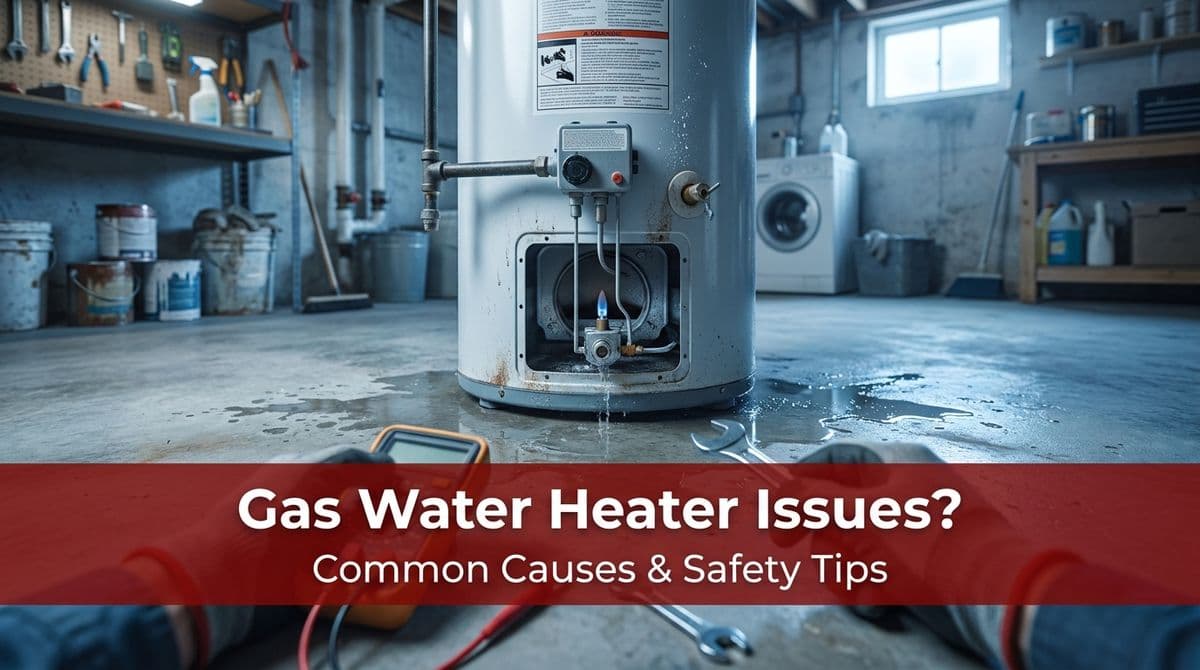
When a Pilot Light Won’t Stay Lit (and There’s Water on the Floor)
We recently got a call from a customer — let’s call him Mike — who was pretty frustrated with his gas water heater. His pilot light would light, but as soon as the main burner kicked on, the flame seemed to blow the pilot right out. On top of that, he noticed water standing around the base of the tank.
That combination — a pilot light that won’t stay lit and water on the floor — always makes us pay close attention. It can be something minor, but it can also be a sign that the water heater is on its last legs or that there’s a safety concern.
Using Mike’s situation as a real-life example, we want to walk through the most common causes, what’s safe (and not safe) to try yourself, and when it’s time to give us a call.
Why Your Gas Water Heater Pilot Light Won’t Stay Lit
When we arrive to a call like Mike’s, we usually start with a few key suspects. A gas pilot that won’t stay lit almost always comes down to one of these issues:
- Dirty or faulty thermocouple – The thermocouple is a small safety device that “senses” the pilot flame. If it’s dirty, bent, or failing, it will shut off the gas even if the flame is there, so the pilot keeps going out.
- Clogged pilot orifice – Dust, rust, or debris can partially block the small opening where the pilot flame comes out, giving you a weak, unstable flame that blows out easily.
- Drafts or backdrafting – If the water heater is in a drafty area, or if the venting is not pulling combustion gases out properly, air movement can literally blow out the pilot when the main burner fires up.
- Faulty gas control valve – The gas control (thermostat) on the front of the tank can fail internally and stop sending steady gas flow to the pilot.
In Mike’s case, every time the burner turned on, the change in airflow around the burner chamber looked like it was knocking out the pilot. That told us to pay attention to the pilot assembly, thermocouple, and venting, not just the ignition.
What the Water Around the Tank Might Be Telling You
The second red flag in Mike’s call was the standing water around the water heater. That can be completely unrelated to the pilot problem — or it can be the clue that the heater is failing.
Here are the most common sources of water around a gas water heater:
- Condensation – On a cold morning, a tank heating up for the first time can sweat heavily. This usually shows up as light moisture, not a steady puddle.
- Leaking drain valve – The small valve at the bottom of the tank can drip or seep if it’s bumped or corroded.
- TPR valve discharge – The temperature and pressure relief (TPR) valve on the side or top of the tank has a pipe running down the side. If it’s leaking or discharging, you may see water on the floor. This can signal excess pressure or a failing valve and should always be taken seriously.
- Actual tank leak – If the tank itself is rusted through and leaking from the bottom, the water heater is generally at the end of its life and will need replacement.
With Mike, we inspected carefully to see if the water was coming from a fitting we could fix, or from the tank itself. Whenever we see water and ignition issues together, we treat it as a sign that the heater might be aging out and that safety checks are a must.
Safety Concerns: When You Should NOT DIY
We understand the temptation to “just relight it” a few times and hope the problem goes away. But with gas appliances, there are a few clear lines where we recommend calling us instead of experimenting.
Stop and call a plumber (or gas utility) if you notice:
- Any smell of gas around the unit or in the room.
- Soot, scorch marks, or melted plastic near the burner or draft hood.
- The TPR valve pipe is dripping or discharging hot water regularly.
- A steady, growing puddle that appears to come from under the tank itself.
Gas leaks, backdrafting (exhaust coming back into the home), and over-pressurized tanks are not DIY jobs. If you are at all unsure, we prefer that you play it safe and let us take a look. We work with these systems every day and can test for leaks, check venting, and evaluate whether repair or replacement makes the most sense.
Simple Checks Homeowners Can Do Safely
That said, there are a few basic things most homeowners can safely check before calling, as long as you do not smell gas and the area is dry and well-ventilated.
Here are a few low-risk steps you can take:
- Check the gas shutoff valve – Make sure the gas valve on the supply line to the heater is fully open (handle in line with the pipe).
- Confirm the thermostat setting – If the control is set very low or to “vacation,” the burner may not be firing when you expect.
- Look for obvious drafts – If the unit is in a garage or near an exterior door, strong drafts can blow out a weak pilot. Try closing nearby doors and see if that helps.
- Follow the lighting instructions exactly – The manufacturer’s lighting instructions on the heater’s label should be followed step-by-step. Skipping a step can cause the safety systems to shut the pilot off.
If you still cannot keep the pilot lit after those checks, that is usually the point where we recommend scheduling a visit. There is likely a failing part or a venting issue that needs a professional eye.
Basic Maintenance to Prevent Leaks and Extend Heater Life
After visits like Mike’s, we often talk with homeowners about a few simple maintenance habits that can help avoid future surprises and keep a water heater running safely for longer.
Here are some homeowner-friendly maintenance tips:
- Visually inspect the heater every month – Take a quick look for rust, moisture, or corrosion on pipes, around the drain valve, and at the base of the tank.
- Test the TPR valve annually (carefully) – Lift the lever briefly to ensure water flows through the discharge pipe, then snaps back and stops flowing. If it won’t reset or keeps dripping, call us.
- Drain a few gallons once or twice a year – Connecting a hose to the drain valve and flushing a few gallons can help reduce sediment buildup, which can overheat the tank and shorten its life.
- Keep the area around the heater clear – Store combustibles away from the unit, and keep a couple of feet of open space so air can circulate for proper combustion.
- Know the age of your heater – Most tanks last about 8–12 years. If yours is older and showing signs of rust, leaks, or pilot issues, it is wise to start planning for replacement before it fails catastrophically.
These small steps do not replace professional service, but they can buy you more years from your system and help you spot problems early, before you end up with no hot water and a flooded floor.
When It’s Time to Call Us
With Mike, the combination of a stubborn pilot and water at the base of the unit told us it was time for a thorough inspection. Sometimes we can clean or replace a thermocouple, adjust the pilot assembly, and repair a minor leak. Other times, the safest and most cost-effective option is to replace an aging tank before it fails completely.
If your gas water heater pilot light will not stay lit and you see water around the tank, we strongly recommend having a licensed plumber check it out. We can:
- Diagnose whether the problem is with the pilot assembly, thermocouple, gas valve, or venting.
- Find the true source of any leaks and let you know if repair or replacement is the smarter move.
- Make sure the system is operating safely so you are not guessing with gas in your home.
If you are dealing with these symptoms right now, do not wait for it to get worse. Reach out to us, and we will come out, inspect your water heater, and walk you through your options so you can get reliable hot water back — safely and with peace of mind.