Leak Repair in Lubbock, TX
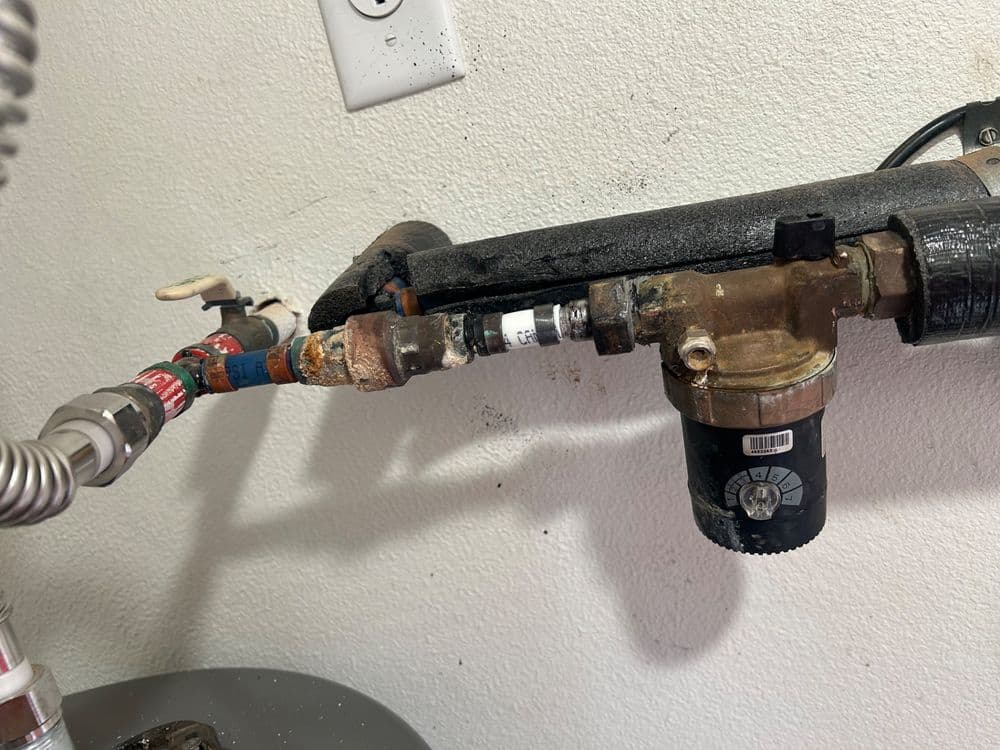
Leaks don't always announce themselves with a flood. Sometimes it's a slow drip from a corroded fitting, a weeping joint buried under foam insulation, or a brass valve that's just been pushed past its limit. That's exactly the kind of situation we walked into on this job near 135th St in south Lubbock.
What we were working with here was a heavily corroded plumbing assembly - multiple fittings, a brass solenoid valve, and supply lines that had clearly been patched and re-patched over the years. The foam insulation wrapping the pipe was deteriorating, and the corrosion on the fittings made it obvious this section had been dealing with moisture for a long time. This isn't unusual in older mechanical rooms, but it does make the repair work more involved.
When corrosion gets this bad, you can't just tighten a fitting and call it done. We had to assess every connection point, identify exactly where the failure was happening, and make sure the repair would hold without creating a new weak spot somewhere else in the line. That's the part most people don't see - the diagnostic work before any wrench turns.
We've handled a lot of these jobs across Lubbock, and the south side neighborhoods near 135th see a fair share of aging plumbing infrastructure. Getting ahead of a leak like this before it causes water damage to walls, flooring, or a mechanical room is always the right call. Small leaks have a way of turning into expensive problems fast.
Cotton City Plumbing handles exactly this kind of work - the stuff that isn't glamorous but matters a lot when it comes to protecting your home.